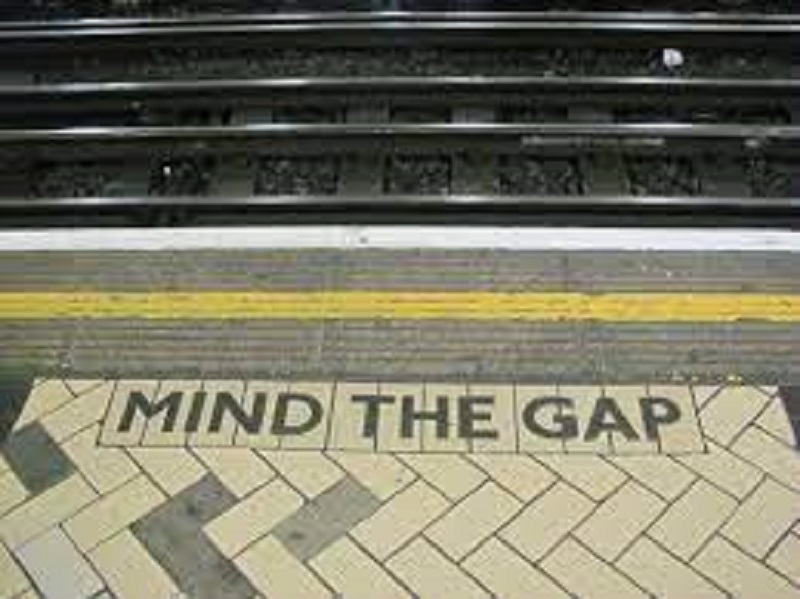
The Succession Plan Most of Us Have Never Contemplated
I am a widow. I have no children of my own. I am an only child. I am a solo-ager. By personality, I tend to prefer my own company. I am currently able to provide for myself financially, and I manage what are known in geriatrics as “independent activities of daily living” — the rhythms of a functioning adult life.
I have a will and a trust. I have named proxies for my legal and healthcare decisions. I have even written instructions for who will care for my cats if I die before they do.
And yet.
I have not made a succession plan for the day — hopefully still far off— when my mind is no longer capable of managing these things on its own. Why not? Because there are almost no templates for this now-common eventuality. And I’ve been doing this work professionally for thirty years. If someone like me — a geropsychologist who has spent her career thinking about aging — hasn’t sorted this out, I suspect I’m not alone.
The Question We’re Not Asking
Most of us, when we think about succession planning, think about death. Who gets the house. Who inherits the furniture, the photographs, the collection of things we’ve accumulated over a lifetime. Legally, this is relatively straightforward territory. A will or a trust handles it. Painful, yes. Complicated, sometimes. But the systems are in place to manage all the details.
The question we are not asking — and urgently need to — is this: what happens in between? What happens when you are alive, but no longer fully able to manage? Who will pay the bills when the due dates slip past you? Who will get the oil changed in the car, send the birthday cards, track the medications, show up for the appointments? Who will see that the garbage goes out?
These are not dramatic questions. They are the small but essential interlocking cogs of a life, and when that machinery stops running smoothly, the consequences are serious. This is the succession plan most of us have never made.
Living Longer Changes Everything
The systems we have in place to support aging Americans were designed in the 1960s, when the average lifespan was 66 to 68 years for men, and 73 to 74 years for women. People who needed care typically needed it for a relatively short time, and what they needed was largely physical — palliative, end-of-life support.
Today, we are routinely living into our eighties, nineties, and beyond. And the challenge has shifted. We are living long enough, in many cases, to experience significant cognitive change before we die. The question is no longer only “who takes care of things after I’m gone?” It is “who takes care of things if I’m still here, but no longer able to fully run the show?”
That is a different problem. And it requires a different kind of planning.
The Issues No One Warns You About
There are several dimensions to this kind of planning that rarely make it into the standard estate-planning conversation.
Timing. When do you hand over control? This is one of the hardest calls anyone makes. Give up too soon and you may surrender autonomy you weren’t ready to lose. Wait too long and the handover becomes chaotic, contested, or simply too late. There is no clean threshold. What there can be is a plan that names the signs you’ve agreed to watch for — and someone you trust to be honest with you when they see them.
Willingness. Who is willing to take this on? Succession by birth order — the eldest child steps in — is an artifact of older patriarchal traditions and not always the best choice for you. The person who loves you most may not be the person best equipped to manage your finances, navigate a medical system, or make hard calls on your behalf. These are conversations worth having while everyone is calm and capable.
Trust. Underneath all of this is a simpler but surprisingly challenging question: who do you trust? Trust is not the same as affection. It is specific, practical, and earned. A succession plan that doesn’t rest on a foundation of genuine trust is a plan with a fault line in it.
Dignity and Quality of Life. A succession plan is not just a logistics document. It is, at its best, a statement of who you are and how you want to be treated. What does a good day look like for you? What are you not willing to give up? What does “being cared for” mean to you? These questions deserve a place in your planning.
Starting the Conversation
I hope this resonates with you. And encourage you start a conversation with the people you want to support you. If you’ve been putting off this conversation – unsure how to start or worried it will feel awkward — here are some ways to begin. None of them require you to have all the answers. They just require you to open the door.
After a teachable moment: “I’ve been thinking about what happened to [friend or family member]. It made me realize we should talk about my own plans.”
Straightforward: “I need to talk with you about some important things related to my aging. I know it’s not the most comfortable topic, but it’s important to me that you know my wishes.”
Practical framing: “I’ve been updating my estate documents, and I wanted to share some information with you so you know what I’ve set up.”
Future-focused: “I want to make sure that when I do need help down the road, you know what I want and where everything is.”
Gift framing: “One of the most important things I can give you is peace of mind about my future care. I want to talk about my plans so you don’t have to guess.”
Relief framing: “I’ve been avoiding this conversation, but I think we’ll both feel better once we’ve talked about it.”
Confront the Difficult While It Is Still Easy
The Chinese philosopher Lao Tzu observes that the sooner we engage with difficult things, the less difficult finding a solution becomes. Aging is one of those inevitabilities that our culture has systematically put off confronting. But it is easier — much easier — to plan for these things while the planning is still ours to do.
Start now.
2 responses to “Who Will Take Out the Garbage?”
-
Wonderful Mary! Exactly what I needed today!!! Thank you so much for putting into words what is swirling around in my head. With four grown children, who all have their opinions, a revocable trust, a will, a husband with dementia and my limited energy, I realize that I must have this conversation with all who think they know what’s best for us, before I get even older and less capable.
-
Thx for writing about this gap in advance care planning. For my deceased mother and father-in-law, my wife was a god-send who not only coordinated supportive care, but also helped coordinate the care of friends and family. She’s been doing this for her mother for the last 6 years. My mother-in-law lives in a small board and care home that knows her well, but when a medical problem occursm my wife is the one who makes the hard decisions. In addition, when she visits her mother, it’s not just addressing her mom’s needs, but it’s caring for the other residents social needs. I’ve recently told her that the facility should hire her as their activity director.
For the single women w/o nearby family, identifying someone who knows them and can execute what they know about them over time and stay healthy if alot of “if’s”. In California, we now have the office for unrepresented patients, but it’s far better to try to manage all the “Ifs” as part of your advance care planning document.


Leave a Reply