
Seeking Safety: Eight Years Later
Note: This is an updated version of a blog post I wrote in February, 2018. I wish I could use it to demonstrate all the gains aging Americans have made. But I can’t. Sadly, eight years on, we as a cohort are more vulnerable than ever because of actions this Administration has taken to defund health care, housing assistance, and supplemental nutrition benefits (SNAP). If you haven’t already voted, you will have a chance to vote in ten days’ time. Your vote COUNTS!
On the Eve of the Midterms
The intensity and frequency of threatening events over the past few months have affected me as well as my friends and neighbors. We are all humming at a higher level of stress and anxiety, reflecting a growing feeling that the world we once thought predictable and stable may not be that way at all.
I worked exclusively with elders in my psychology practice before I retired. For the most part, the work I did with them centered on managing feelings of loneliness, purposelessness, and invisibility, and on dealing with physical pain and loss of functioning.
Eight Years Ago
Eight years ago, those conversations turned to seeking safety. Sadly, these same topics continue to come up in my lectures and classes at my local senior center.
Back then, it seemed that quite a few of my patients were experiencing different levels of vulnerability. Several of them worried about finding and keeping a safe place to live. One or two did their best to stay independent by keeping their old cars running so they could get to doctor’s appointments and do their marketing. Many were afraid to walk in their neighborhoods for fear of being attacked. All of them expressed sadness and regret over the lack of quality relationships with their children and grandchildren.
Maslow’s Hierarchy of Needs
In the 1940s, Abraham Maslow developed a theory he called the “Hierarchy of Needs.” Maslow theorized that one of our basic needs is safety. This includes protection from exposure to the elements, a sense of security, order, law, stability, and freedom from fear. Another is the need for “love and belongingness.”
If these foundational needs are not met, the result is a deep sense of deprivation. Short-term deprivation affects our self-esteem and our belief in how effective we are at getting our own needs met. Long-term deprivation can so destabilize a person that they become unable to make decisions, take care of themselves, or function at all.
Today, many of the folks I am connected with are experiencing both short-term and long-term deprivation at each of these levels. I see the consequences every day: none of us are able to get our basic, foundational needs met. The cost is a decline in our well-being and a sense of despondency that is hard to lift.
Four Freedoms
This isn’t the first time Americans have faced these kinds of challenges. Recent history includes the challenges we faced after the Great Depression and during World War II. Strides in meeting the social and economic needs of all Americans were achieved through bold policies and through federal programs such as Social Security and Medicare.
We grew complacent because, for decades, these programs met our need for security, order, law, stability, and freedom from fear. But these programs are now at risk of being defunded.
Our expectations are at risk of no longer being met, and this leaves us all vulnerable.
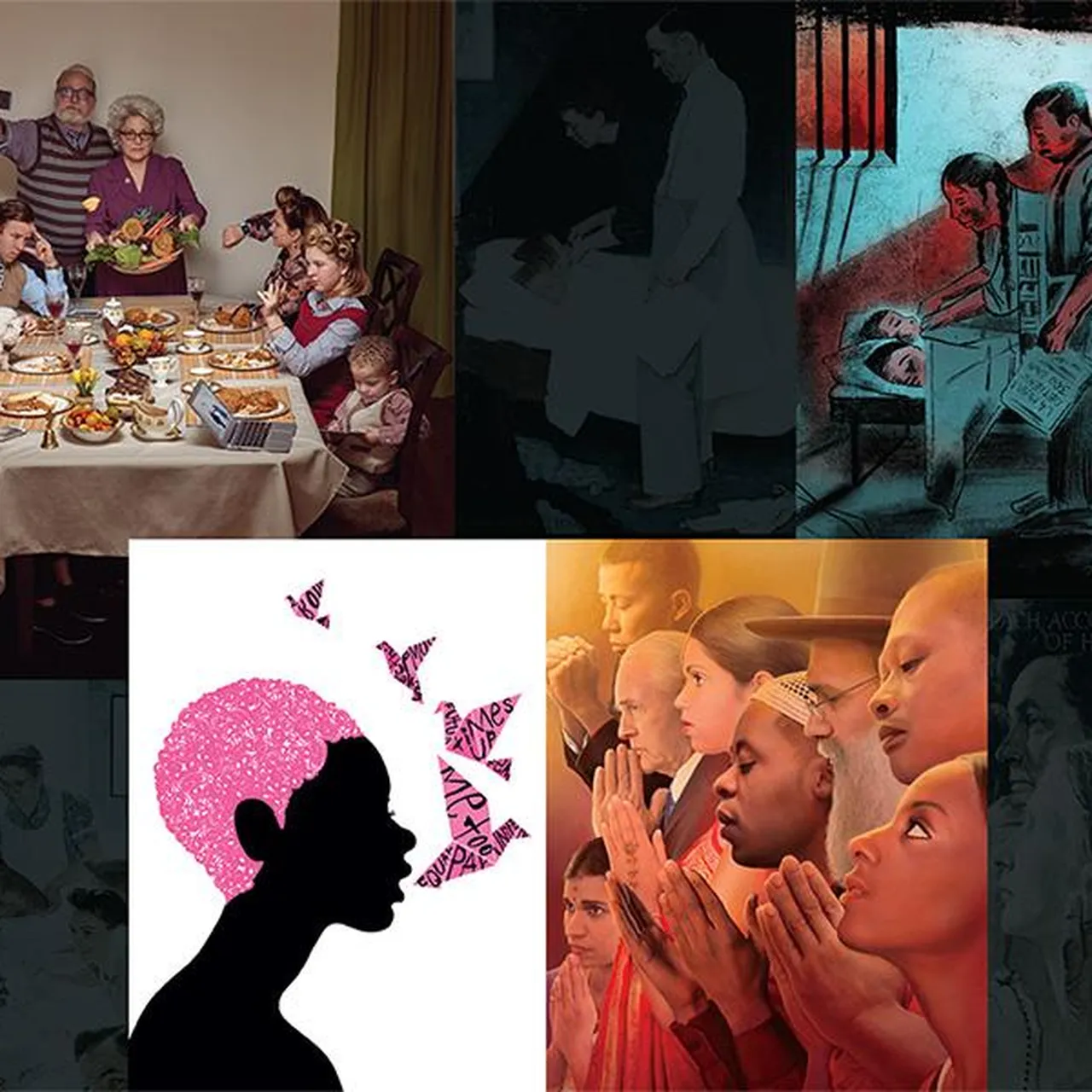
Franklin Delano Roosevelt outlined four freedoms that all Americans should experience: freedom of speech, freedom of worship, freedom from want, and freedom from fear. While his goal was political, these ideals have resonated in many different ways over the decades and have been enshrined in programs that meet the essential needs of Americans, old and young!
Freedom of Speech
What does it mean to be able to speak freely in our country today? Too many of us are afraid to talk honestly about politics or values. We are afraid of being confronted on social media or of losing friendships of many years. Once-trusted sources of information now appear biased or infected with propaganda. Fewer venues exist where people can speak with others without fear of being doxxed.
Freedom of Worship
What does it mean to be able to worship freely? We are seeing a resurgence of religious intolerance and the labeling of people based on whom they choose to pray to. With that said, for many elders, the issue is not stigma but access. Getting to church, synagogue, ashram, or mosque is difficult because of a lack of transportation or of accommodations for hearing- and sight-impaired members.
Freedom from Want
Probably the greatest concern for me and my peers is economic insecurity. So many of us rely on Social Security alone and depend on housing vouchers, food distribution, and medical care that comes in the form of government services. Threats to our monthly payments now come regularly. Limitations on services, underfunding of programs and personnel, and complicated, opaque eligibility requirements are all barriers that undercut our freedom from want, leaving us feeling hopeless and alone.
Freedom from Fear
When Roosevelt gave his State of the Union address in 1941, the country was already preparing for war in Europe. After we were attacked at Pearl Harbor on December 7, 1941, that sense of vulnerability to an enemy resulted in Japanese Americans being placed in detention camps.
The reasons are different, but not much has changed today. Sadly, that kind of fear is something Americans live with on a daily basis. My Latino friends and neighbors rightly fear for their future because it is being taken away so easily.
Political Realities Affecting the Lives of Older Americans
We are subject to an Administration that would rather spend billions of dollars funding ICE to round up and detain the very people who harvest and package our food, or who care for our loved ones needing help with activities of daily living. In my part of the country, these services are provided by hardworking individuals who care deeply about elders but who lack proper paperwork.
Our government now spends billions of dollars on a war in Iran rather than securing the safety of our neighborhoods and creating sufficient affordable housing where people can live without fear of eviction. This is especially troubling for older adults on fixed incomes. Statistics suggest older Americans are among the fastest-growing segments of the unhoused population.
As a nation, we have chosen to give corporations tax benefits while defunding or eliminating programs that have a proven record of providing food, clothing, and shelter to those among us who are no longer able to secure these things for themselves.
Shame on Us!
Simply put, we know what is needed: affordable housing; access to nutritious food in sufficient quantities to support health and well-being; the ability to engage in purposeful activities with others who are supportive and loving; freedom to move within one’s home, neighborhood, and extended community; access to transportation; and opportunities to interact with peers and across generations.
Social Security and Medicare are permanent programs, but their trust funds face shortfalls in the early 2030s unless Congress acts. The Older Americans Act, which funds senior meals, transportation, and senior centers, depends on Congress renewing the law and funding it every year. The Act’s authorization lapsed in 2024 and has yet to be renewed. That makes all of these programs vulnerable. Because we assumed these programs were permanent, we stopped defending them, stopped showing up, and let others decide their future.
For myriad reasons, we became complacent and expected these programs and policies to remain in place. We took for granted that they would always be there. We found them easy targets for complaints and forgot how essential they are, not just to aging Americans, but to all Americans.
It’s Not Too Late
It’s time to get involved. Start by making sure you vote. Then find out which local programs need help and what kind of help is needed. If you can, contribute money. If you can’t, contribute your experience.
Stay connected with your friends and your community. That is how we can secure freedom of speech, freedom of worship, freedom from want, and freedom from fear. We just have to want to.

Leave a Reply